Tübingen is a research city. One of Germany's oldest and most renowned universities and a wide range of top-level research institutes, including several Max Planck Institutes, the Leibniz Association and the Helmholtz Association, are located here. Together, they make Tübingen an ideal place for science and research.
The Tübingen Research Campus aims to further intensify cooperation among local research institutes and to offer joint services to scientists interested in joining us.
Visit pageMeet just some of the many faces of collaborative research in Tübingen! Our short film takes you on a tour of our research facilities, the city of Tübingen, and our research focus areas. Tübingen has what research needs.

Tübingen's unique research environment provides an ideal ground for collaborative projects in various areas. This is one of the many reasons why Tübingen is receiving funding from the German Federal and State Governments Excellence Strategy. As a consequence, excellence attracts further excellence: Over the years, more and more top-level research institutions have come to the city, forming the rich and vibrant academic community of the Tübingen Research Campus.
Visit page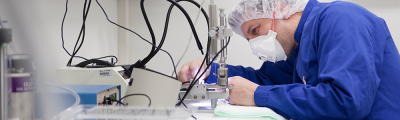
Tübingen is a special place for research. Very few locations offer such a wide range of research areas in such close proximity - both physically and figuratively. Not only are all of Tübingen's research institutions just a stone's throw away from each other, they also collaborate closely within the Tübingen Research Campus.
Visit page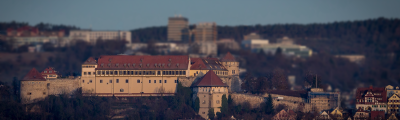
Life in Tübingen is life in the heart of Europe and in one of Germany's most scenic and economically competitive regions. It's a bustling mediaeval town with a young, international, and vibrant population and a rich cultural and artistic scene. Lectures, concerts, film festivals, and more: life in Tübingen never gets boring.
Visit page
The Neurosciences in Tübingen with more than 100 active research groups have the potential to rank among the most successful neuroscientific sites in Europe.
Visit pageYou are warmly invited to a seminar on mechanobiology taking place on March 18 at 12:15 at the Geo- and Environmental Center (GUZ).
Speaker: Alexander (Sasha) Bershadsky (National University of Singapore; Weizmann Institute of Science)
Title: “Diverse integrin-mediated cell–matrix adhesions and a unifying model for their regulation by microtubules”
Lab page: https://www.mbi.nus.edu.sg/alexander-bershadsky/; Wiki page: https://en.wikipedia.org/wiki/Alexander_Bershadsky
Host: Nisha Mohd Rafiq (IFIB, University of Tübingen)
Location:
Hörsaal (3M07)
Geo- and Environmental Center (GUZ)
Schnarrenbergstraße 94–96
72076 Tübingen
Meet the speaker
Sasha is also open for personal meetings. If you would like to meet him, please send a short message to nisha.mohd-rafiq@uni-tuebingen.de and she will try to arrange it according to his schedule.
Everyone is cordially invited.
This seminar is part of the GRK2381 seminar series.
Prof. Dr. Vlasta Sikimić will hold a workshop on 30 September.
The workshop is aimed at researchers from all disciplines, especially female early career scientists.
Building inclusive science: be the driver of change
Tuesday, 30 September 2025 from 2:00 to 5:00 p.m.
Carl Friedrich von Weizsäcker Center, lecture room
Doblerstr. 33, 72074 Tübingen
Registration until 29 September via: https://eveeno.com/805380713
Prof. Dr. Vlasta Sikimić is an Assistant Professor of Philosophy of Science and a member of the Philosophy & Ethics group at Eindhoven University of Technology. Her research focus is on Social Epistemology of Science, Metascience, Philosophy of AI in Science and Philosophy of AI in Education.